Key points of hot-dip galvanizing process for greenhouse seedling cart frame
2026-07-24 18:30:51
Hot dip galvanizing is a common processing method for anti-corrosion treatment of seedling cart frames. After hot-dip galvanizing treatment, metal components such as frame columns, beams, and bases are adapted to high humidity environments in greenhouses, reducing metal corrosion caused by water vapor and fertilizer residue, and directly affecting the service life of seedling carts. This article explains the key process control points in the hot-dip galvanizing process of seedling cart frames.
The raw material and substrate are carbon steel profiles specifically designed for seedling vehicles, and all cutting, punching, bending, and welding processes are completed before processing. All hole positions, adjustment slots, and welding interfaces should be processed and formed before galvanization. It is not recommended to cut holes after galvanization to avoid damaging the surface galvanized protective layer and causing rust starting points at the cross-sectional position. The welding position needs to be polished to remove welding slag and burrs. There should be no welding slag or oil stains left in the gaps of the components to prevent residual bubbles and missed plating defects during the galvanizing process.
The pre-treatment process includes degreasing and oil removal, acid pickling and rust removal, and plating assistance treatment. The oil, rust, and oxide layer on the surface of the component need to be thoroughly removed. Incomplete cleaning of oil stains can result in weak adhesion of the coating; Control the soaking time of acid pickling to avoid over pickling of steel, which may cause pitting and sand holes on the surface of the substrate. After acid washing, it enters the auxiliary plating solvent pool to form a uniform auxiliary coating on the surface of the component, providing conditions for the bonding between the zinc solution and the steel substrate.
The component is immersed in a high-temperature zinc solution to complete the hot-dip galvanizing operation, and the galvanizing time is controlled to ensure that the zinc layer can adhere to both the inside and outside of the component, as well as the inner walls of the holes and grooves. There are a large number of long adjustment holes in the seedling model material, and it is necessary to ensure the circulation of zinc liquid inside the holes to prevent zinc accumulation and blockage of the holes, and to avoid bolts and buckles from being unable to penetrate the holes during later assembly. After the components are removed from the zinc pot, shake and centrifuge them to remove excess zinc liquid from the inner cavity of the profile and reduce surface zinc nodules and burrs.
The cooling stage adopts water cooling technology to control the cooling rhythm and reduce the probability of component deformation. The frame of the seedling nursery vehicle is a long rod, which is prone to slight bending due to thermal expansion and contraction. After cooling, the entire profile is straightened to ensure the straightness of the columns and beams, and to ensure that after the later assembly of the whole vehicle, the layer boards can be placed horizontally without tilting or jamming.
In the post-processing inspection stage, inspect the appearance of the components. The qualified workpiece coating is continuous and complete, without problems such as missed plating, exposed substrate, peeling, and large zinc nodules; Polish and repair local small zinc protrusions. At the same time, the thickness of the coating is controlled, and in the greenhouse usage scenario, the coating thickness of the frame components meets the requirements of the working conditions. For welding corners, hole edges, and other locations, they are the key inspection areas.
The components after hot-dip galvanizing are no longer welded, polished, or cut. If cutting holes on site, the exposed section needs to be coated with anti-corrosion treatment. When stacking galvanized components that have been processed, they should be isolated and protected to avoid collisions and scratches on the coating. During the assembly process of the seedling vehicle, it is forbidden to strike the frame vigorously to prevent the peeling of the galvanized layer and ensure the performance of the frame in humid greenhouse environments.
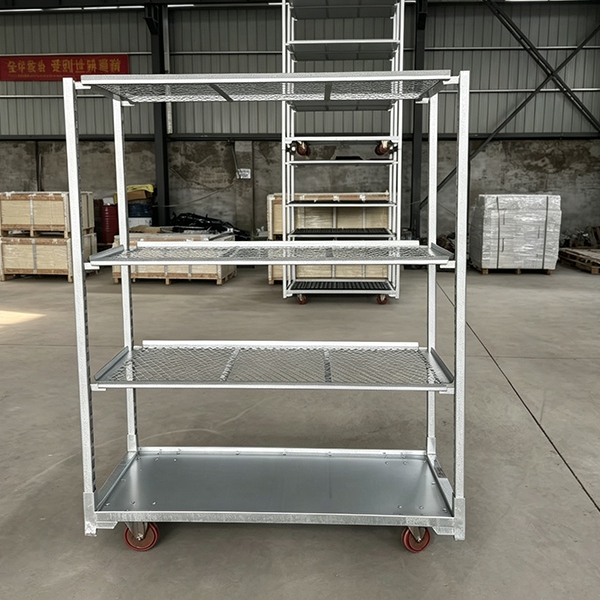
1、 Product Overview: The partition pull plate net seedling cart is a multi-layer turnover...
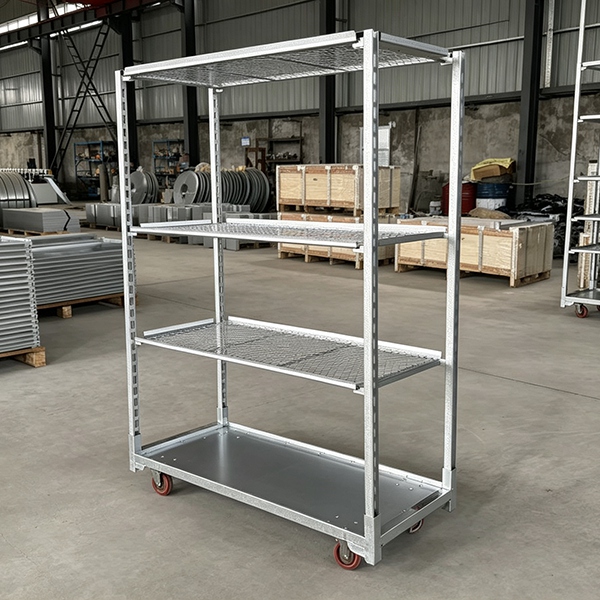
1、 Product Overview: The partition pull plate net seedling cart is a multi-layer turnover...
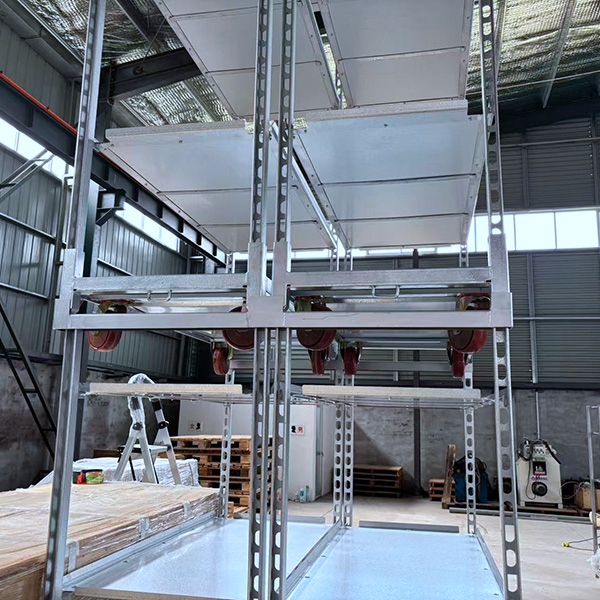
1、 Product Overview: The partition pull plate net seedling cart is a multi-layer turnover...
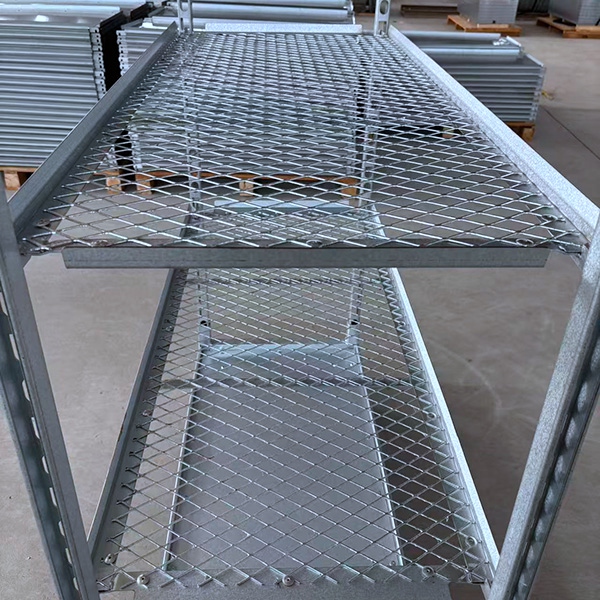
1、 Product Overview: The partition pull plate net seedling cart is a multi-layer turnover...