Application scenarios corresponding to different interlayer spacing settings of seedling vehicles
2026-07-25 18:46:24
The spacing between the layers of the seedling vehicle refers to the vertical clearance height between the upper and lower support beams. The spacing directly determines the height of the seedling tray and flower pot that the vehicle can accommodate, and also affects the air circulation inside the shed and the convenience for operators to take and place materials. By setting the interlayer spacing based on the growth stage of seedlings, the specifications of loading equipment, and the requirements of working space, the turnover efficiency of seedling trucks can be fully utilized. The common interlayer spacing can be divided into three categories: small spacing, medium spacing, and large spacing, which are suitable for different production processes.
The smaller interlayer spacing is generally set at 12-18cm and is often used for sowing and germination processes. At this stage, the seeds have just been sown and the seedlings have not yet emerged. The overall height of the seedling tray is low, and there is no need for upward growth space for the seedlings. The environment of the germination room is sealed and high humidity, with the main goal of placing a large number of seedling trays and increasing the loading capacity of unit vehicles. Narrowing the interlayer spacing allows for more layers to be arranged on a single seedling cart, improving the utilization of space in the germination room and accommodating more sowing trays per unit space. This layer spacing is only suitable for the germination stage, and it is no longer applicable after the seedlings have grown taller. The selection and placement of trays are mainly done by pushing and pulling, and are not suitable for placing flowerpot products.
The medium interlayer spacing is commonly 20-30 cm, which is a commonly used specification during the greenhouse seedling refining stage. After emergence, the seedlings begin to grow stems and leaves, and it is necessary to reserve a height for seedling growth while ensuring air circulation between layers to reduce the occurrence of diseases in high humidity environments. This spacing is compatible with most standard seedling trays and can also accommodate low and small potted plants. The operator station can immediately complete tasks such as picking up and placing seedling trays, checking watering, etc., with a relatively effortless working posture. Most vegetables, flower seedlings are refined and transported within this range. If the leaves of the plant stretch significantly, the interlayer spacing can be moderately increased to avoid scratching and damaging the lower leaves of the plant from the bottom of the upper layer.
The spacing between large layers is usually set at 35-50cm or more, which is suitable for the turnover of seedlings with higher plant types, potted plants, and finished flowers. The height of the stems and leaves of the seedlings is relatively high, and sufficient growth space needs to be reserved to prevent the top of the plant from reaching the upper layer board, causing leaf compression damage. Sorting of flower products for shipment and turnover of potted plants, often using large interlayer spacing. A larger clearance height makes it easier for personnel to observe the status of plants and carry out pruning, spraying, and other operations. This configuration will correspondingly reduce the number of layers on a single chassis, resulting in a decrease in the number of loaded vehicles. It is suitable for finished product transportation, display and outbound processes, but not suitable for large-scale palletizing operations for sprouting.
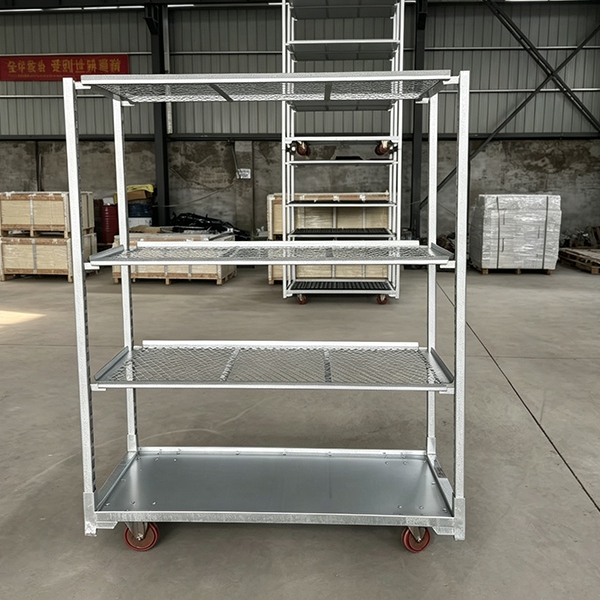
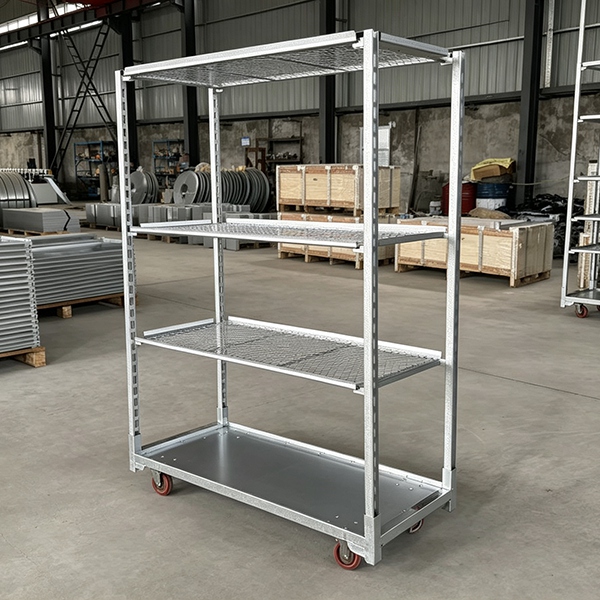
In actual production, the same seedling cart can also be set with non-uniform differentiated interlayer spacing. The lower layer uses large spacing to place tall potted plants, while the upper layer uses medium to small spacing to place seedling trays, suitable for mixed loading operations. When customizing and selecting, it is not enough to only refer to the height of the object itself, but also to reserve space for operation, taking into account watering, ventilation, and the space for later plant growth. It is not enough to only set according to the actual height of the flowerpot and seedling tray.
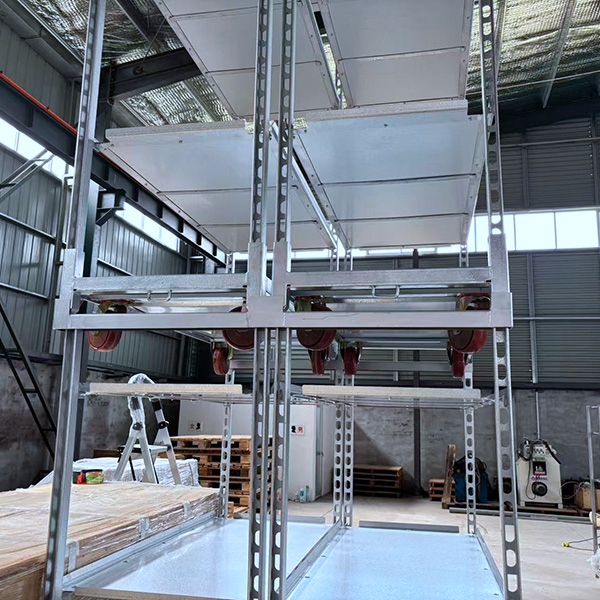
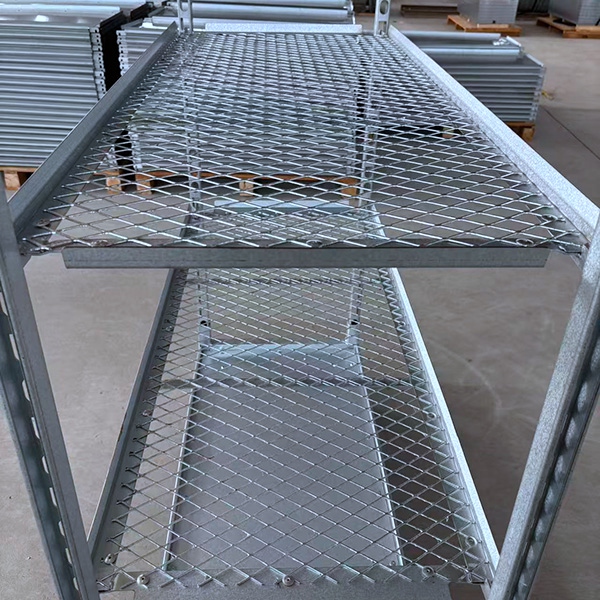
There are differences in the working conditions of the germination room, seedling refining greenhouse, and finished product sorting workshop. Do not directly apply the same set of interlayer spacing parameters. For customized foreign trade orders, the interlayer spacing size needs to be determined based on the general specifications of local seedling trays and flower pots. When the production mode changes in the later stage, relying on the modular structure of the seedling cart, the installation holes of the crossbeam can be adjusted to complete the change of interlayer spacing and adapt to different production operations in the future.
1、 Product Overview: The partition pull plate net seedling cart is a multi-layer turnover...
1、 Product Overview: The partition pull plate net seedling cart is a multi-layer turnover...
1、 Product Overview: The partition pull plate net seedling cart is a multi-layer turnover...
1、 Product Overview: The partition pull plate net seedling cart is a multi-layer turnover...